| Risk | Opportunity |
|---|---|
| The Company procures products and services from suppliers and contractors for the main activities of industrial estate business operations and the work that supports the management of industrial estates. As a result, the quality of products and work of suppliers and contractors have a direct impact on the Company and its stakeholders, both positively and negatively. Suppliers and contractors with substandard performance or high ESG risks are likely to cause non-compliance with laws and regulations. They may also create negative social and environmental impacts, such as poor waste management, and risks to the safety of people and property. Furthermore, without a good audit process, the Company's suppliers and contractors may contribute to labor and human rights violations, which can create risks to the Company's reputation and credibility beyond the direct economic impact on the Company from the quality of work and delivery time. | Effective supplier and contractor management enables the Company to strengthen quality, business continuity, and operational efficiency throughout the supply chain. This supports the reliable and consistent delivery of products and services in line with established standards, enhances customer satisfaction and confidence, and contributes to the smooth operations of businesses within the industrial estates. In addition, the screening, development, and capability enhancement of suppliers and contractors help strengthen the Company's pool of qualified suppliers and contractors to support future business expansion. |
The Company has established a “Sustainable Procurement Policy” to enhance supply chain management towards greater responsibility, transparency, and alignment with sustainable development principles. The policy emphasizes sourcing and procurement of raw materials, equipment, and services with consideration for environmental, social, and governance (ESG) impacts alongside economic efficiency. The Company places importance on the selection and development of suppliers and contractors to ensure fair labor practices aligned with relevant standards, efficient resource use, and the reduction of environmental impact. Additionally, the Company promotes collaboration with business partners across the supply chain to increase resilience, reduce risks, and generate shared value that benefits society, the economy, and the environment in the long term.
The Company has appointed the AMATA Procurement Working Committee, which is chaired by the Chief Financial Officer. The Working Committee consists of senior executives from the Company and its subsidiary companies and is responsible for developing procurement best practices that comply with international and ethical standards. The Committee also sets the procurement standards of the AMATA Group, prepares, and disseminates the “Supplier Code of Conduct” on the Company’s website as well as directly notified each supplier. This is to communicate the Company’s commitment to ethical and responsible business practices that take economic, social, and environmental impacts into consideration. The contents of the Supplier Code of Conduct are as follows:
Comply with applicable laws and regulations and hold all required business licenses. Conduct business with integrity, honesty, transparency, and accountability. Ensure appropriate disclosure of information, maintain confidentiality, and respect intellectual property rights. Do not engage in corruption, bribery, extortion, fraud, or embezzlement, and deliver products and services that meet the Company’s quality requirements.
Respect human dignity and treat employees fairly and equally without discrimination. Ensure employment practices, wages, working hours, and benefits comply with applicable laws. Prohibit forced labor, human trafficking, slave labor, child labor, and the employment of illegal labor. Conduct appropriate due diligence on business partners and subcontractors to prevent human rights violations throughout the supply chain.
Comply with occupational health, safety, and workplace hygiene laws, as well as AMATA’s requirements when operating within the Company’s premises. Provide a safe workplace and working environment, supply appropriate personal protective equipment, record statistics on illnesses, injuries, fatalities, and safety incidents, and communicate workplace risks and control measures to employees and subcontractors.
Consider the impacts of operations on communities and society. Participate in the prevention of adverse impacts and in promoting community health, safety, and well‑being. Establish channels to receive concerns and complaints from stakeholders and take appropriate and fair actions to address and remedy impacts.
Strictly comply with environmental laws and regulations and conduct regular assessments. Operate with due consideration for efficient use of energy and natural resources. Implement systematic measures to prevent and mitigate environmental impacts arising from operations, including the management of wastewater, waste, chemicals, and air emissions. Promote the use of environmentally friendly technologies to reduce greenhouse gas emissions.
The Company requires all suppliers and contractors identified as critical tier-1 suppliers, as well as all new suppliers and contractors, to acknowledge and comply with the AMATA’s Supplier Code of Conduct and Procurement Manual. These requirements are in line with the Company’s sustainable supply chain management approach, aiming to promote awareness and responsible business practices among suppliers. The guidelines emphasize the importance of operating socially and environmentally responsibly, with integrity, fairness, and transparency. In 2025, the Company communicated these documents to all 112 critical tier-1 and new suppliers. All recipients (100%) acknowledged and submitted the signed acknowledgement form in full compliance.
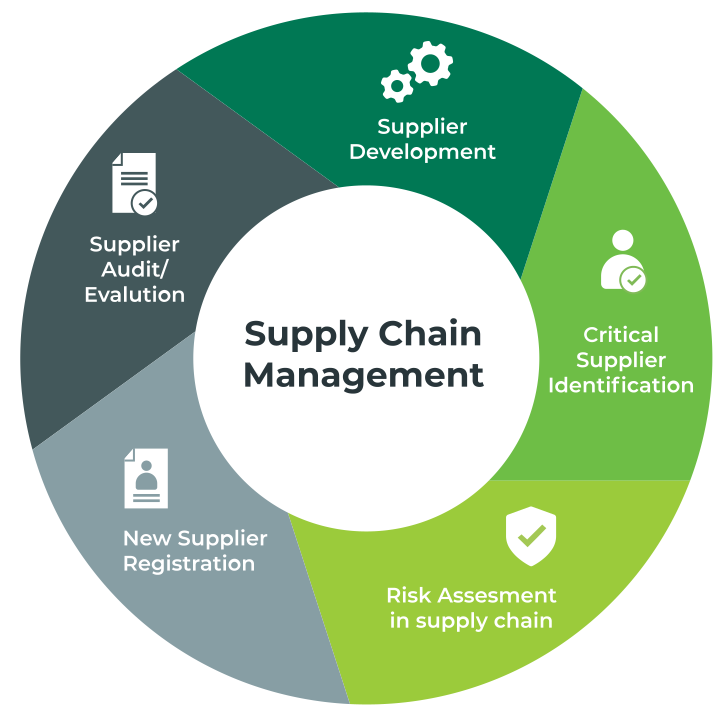
The Company has established the following guidelines for implementing sustainable supply chain management:
The Company has implemented its established guidelines through defined criteria and processes, including the identification of critical suppliers, sustainability risk assessment of suppliers and contractors, and the formulation of appropriate supplier management strategies. Efforts also include capability-building initiatives for suppliers and contractors to mitigate sustainability risks and reduce the negative impacts of business operations in both the short and long term. Key performance outcomes in 2025 are as follows:
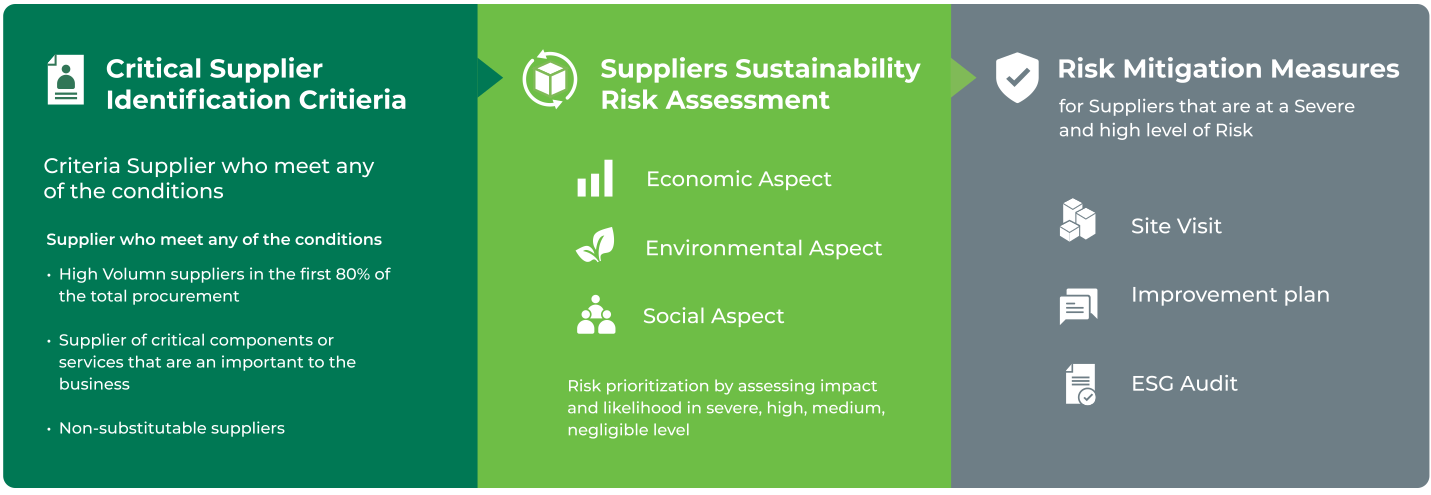
The Company identified critical suppliers from two groups: those that do business directly with the Company (tier-1 suppliers) and those that do not directly engage with the Company (non-tier 1 suppliers). An analysis was conducted to identify these critical suppliers using the following criteria applied to both groups:
In 2025, the Company engaged with a total of 473 tier-1 suppliers and contractors who maintained ongoing direct business relationships within its supply chain. An analysis identified 53 of these as critical tier-1 suppliers, accounting for 85.45% of the Company’s total procurement value. These critical tier-1 suppliers were categorized into three key business segments: 15 in the real estate and leasing business, 15 in the utilities and services sector, and 23 in the goods and services sector, representing 28.30%, 28.30%, and 43.40% of procurement value by business segment, respectively. In addition, there were 64 critical non-tier 1 suppliers who are essential to the supply chain, but not directly conducting business with the Company.
| Types of Suppliers | Number | % of Total Suppliers | % of Total Procurement Value |
|---|---|---|---|
| Tier-1 suppliers |
473 suppliers |
100% of Total Suppliers |
100% of total procurement value |
| Critical tier-1 suppliers |
53 suppliers |
11.21% of Total Suppliers |
85.45% of total procurement value |
| Critical non-tier 1 suppliers |
64 suppliers |
— | — |
The Company conducted a human rights risk assessment to identify activities and business partners that may be exposed to risks related to child labor, forced labor, occupational safety, and potential impacts on other stakeholders. The findings of the assessment are disclosed in the Human Rights in Business Operations section of this report. Labor-intensive construction and service contractors, particularly those engaging subcontractors, were identified as requiring heightened oversight. The Company therefore implements labor document reviews and on-site spot checks, as appropriate, to help prevent labor and human rights risks within the supply chain.
The Company has established a sustainability risk assessment process for suppliers, initially prioritizing critical tier-1 suppliers that conduct direct business with the Company. The process includes the use of an ESG Risk Evaluation Form, while all new suppliers are required to complete a Self-Assessment Questionnaire (SAQ) covering economic, environmental, social, and governance issues. Suppliers are classified into four risk levels, with the scope and frequency of assessment determined based on their risk level. In addition, annual supplier quality assessments are conducted by the Procurement Department and the relevant user departments, with the frequency of assessment varying according to supplier risk level. Suppliers classified as high-risk and very high-risk are required to prepare corrective and preventive action plans. The Company supports its suppliers by providing guidance, as needed, in developing improvement plans to foster and maintain good relationships.
The Company has set a target for all critical tier-1 suppliers and new suppliers, to be assessed for risks related to both economic performance and sustainability, including environmental, social, and governance (ESG) risks. In 2025, the Company completed such assessments for all 53 critical tier-1 suppliers (100%), as well as all 59 new suppliers (100%), achieving the target as planned.
| 2022 | 2023 | 2024 | 2025 | |
|---|---|---|---|---|
| Proportion of products and services purchased in Thailand | 100% | 100% | 100% | 100% |
| Total number of tier-1 suppliers | 527 | 654 | 732 | 473 |
| Total number of critical tier-1 suppliers | 85 | 63 | 51 | 53 |
| Total number of critical non-tier-1 suppliers | NA | 24 | 18 | 64 |
| Total number of new suppliers | 11 | 52 | 89 | 59 |
| Proportion of suppliers and contractors assessed for ESG risks by using Self-Assessment Questionnaire (SAQ) | ||||
| • Critical tier-1 suppliers | 100% | 100% | 100% | 100% |
| • New suppliers | 100% | 100% | 100% | 100% |
| Number of suppliers and contractors with high and very high ESG risks | ||||
| • Critical tier-1 suppliers | 1 | 0 | 1 | 0 |
| • New suppliers | 0 | 0 | 0 | 0 |
Based on the supplier risk assessment conducted in 2025, the Company identified no critical tier-1 suppliers or new suppliers as having high or very high levels of risk across social, environmental, economic, and governance dimensions. For one supplier that had previously been identified in 2024 as having high social and environmental risks, the Company carried out additional on‑site assessments, provided recommendations, and closely monitored the implementation of corrective actions. In 2025, that supplier fully completed all actions under the agreed corrective action plans, and the assessment results confirmed that the identified risks had been reduced to an acceptable level.
The Company requires all critical suppliers and contractors that have already passed the economic and sustainability risk assessment by using the Self-Assessment Questionnaire (SAQ) to have an audit on the economic, environmental, social, and governance topics at their workplaces (on-site ESG audit). The patterns and frequency of the on-site ESG audit depend on the risk level. The critical suppliers with very high and high risk will have an on-site audit as soon as possible; those at moderate risk will be audited once a year; and those at low risk will be audited every two years. The auditing items are set according to the Company’s criteria and the environmental management system (ISO 14001) standards and will be conducted by examining relevant documents and an on-site audit by the AMATA Procurement Working Committee.
| Risk Level | Control and Risk Monitoring Measures |
|---|---|
| Low |
|
| Medium |
|
| High |
|
| Very High |
|
In 2025, the Company had 18 critical tier-1 suppliers required to undergo on-site ESG audit according to the established criteria. The Company successfully completed the audits for all 18 suppliers (100%).
| The total number of suppliers required to undergo on-site ESG Audit | 2022 | 2023 | 2024 | 2025 |
|---|---|---|---|---|
| • Critical tier-1 suppliers | 11 | 22 | 21 | 18 |
| The audit completion ratio for critical tier-1 suppliers during the year | 100% | 100% | 100% | 100% |
| • New suppliers | 0 | 0 | 0 | 0 |
In addition, the Company requires all suppliers and contractors doing business with the Company to undergo annual performance evaluations and assessments of their business relationships with the Company upon completion of the delivery of goods or services. The results of these evaluations are used as supporting information for future procurement decisions.
The Company has established risk management measures for each supplier and provides supplier development support to reduce the likelihood of identified risks and mitigate their potential impacts on suppliers and contractors. During the reporting period, the Company did not terminate any business relationships with suppliers or contractors as a result of these assessments (0%).
The new supplier selection process includes reviewing the qualifications and past performance of suppliers and contractors to determine whether they meet the Company's requirements. All new suppliers are required to complete an ESG risk assessment using a self-assessment questionnaire prior to new supplier registration. If a passing score is achieved and no economic, social, or environmental risks are found, the new supplier will sign the Supplier Code of Conduct Acknowledgement and be registered as a new supplier. If a passing score is not achieved or there are risks, the supplier must develop and submit a preventive or corrective plan and implement it until the score is acceptable before it can be registered as a new supplier.
In 2025, there were 59 new suppliers. All of them passed the specified new supplier selection process (100%).
The Company is committed to conducting business fairly with its suppliers to support their liquidity and capital management, benefiting both parties. It adheres to all supplier agreements and commitments and treats all suppliers equitably. The Company has established policies for screening and evaluating suppliers, including manufacturers, contractors, and subcontractors, ensuring that these processes are effective, standardized, and uphold social responsibility. Additionally, the Company has implemented procurement policies and procedures and formed a procurement committee to ensure transparency, verifiability, and strict adherence to the selection processes.
Regarding supplier payments, the Company adheres to agreements and commitments by offering fair and appropriate trade credit durations, which fosters business collaboration and is crucial for sustaining long-term growth. A Credit Term Policy has been established, specifying payment to suppliers within 30-60 days through a banking channel. This method builds trust with suppliers and ensures timely payments within the policy framework. However, the actual payment period may vary due to specific business limitations, such as product types, service specifications, contract terms, and quality standards. Details on the average account payables days for purchasing products and services are as follows.
| 2022 | 2023 | 2024 | 2025 | |
|---|---|---|---|---|
| Average Account Payables Days | 48 Days | 48 Days | 57 Days | 56 Days |
Furthermore, the Company emphasizes the development of suppliers and contractors throughout its supply chain, particularly those providing critical utility and industrial services, to mitigate social, environmental, and compliance risks. It encourages these partners to enhance their efficiency and align with the Company's standards by developing management systems and obtaining certifications in internationally recognized standards, such as ISO 9001, ISO 14001, ISO 17025, and OSHA 18000.
As a result of the continuous review of safety measures, ongoing safety awareness-building, and close supervision of contractor operations, no serious work-related accidents involving contractor employees were recorded in 2025 that resulted in lost-time injuries or fatalities.
(+66) 38 939 007
(+84) 251 3991 007 (South)
(+84) 203 3567 007 (North)
(+95) 1 230 5627
(+856) 21 810007
(+856) 20 5710007 (Chinese)
(+856) 20 57550007 (English)
© AMATA CORPORATION PCL. All rights reserved. Web by Toneyes