


AMATA Sustainability Framework
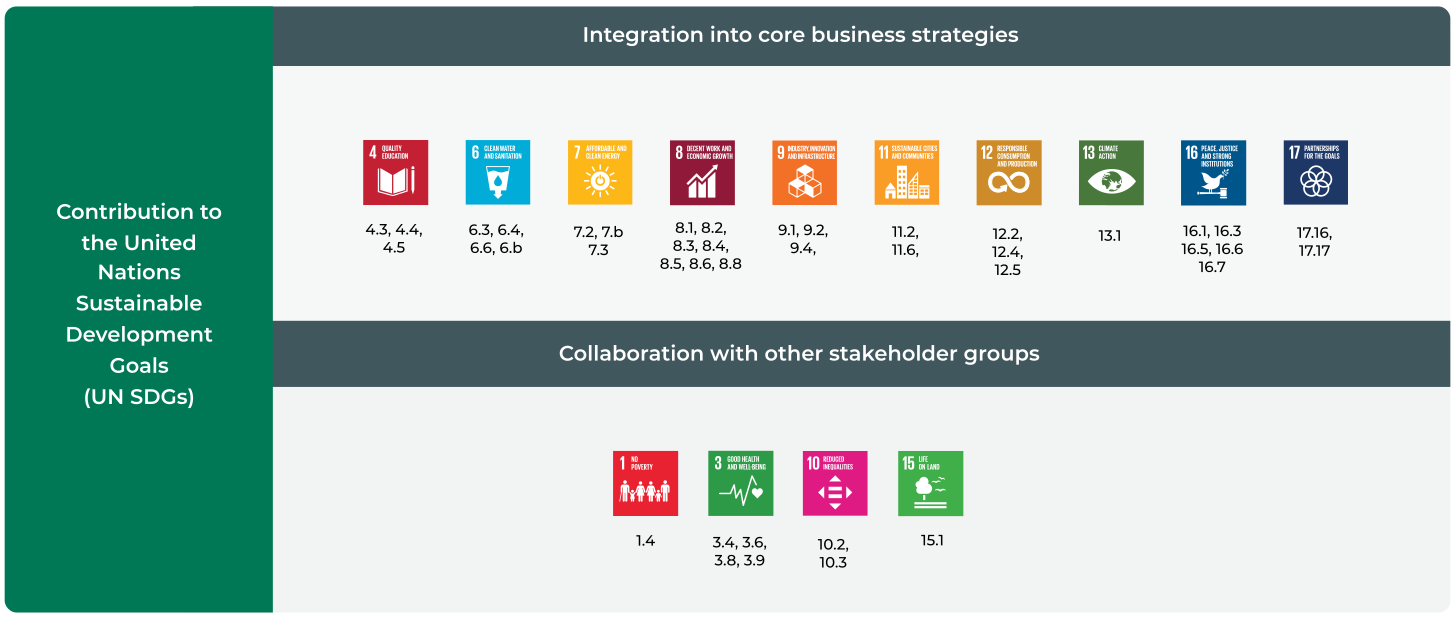
The Company has established the "AMATA Sustainability Framework", a guiding framework driving corporate sustainability across economic, social, and environmental dimensions. This framework focuses on business growth based on social and environmental responsibility, good governance, ethics and integrity, regulatory compliance, and efficient risk management. These efforts are designed to foster a balanced and high-quality coexistence between industry and society, supporting the achievement of the United Nations' Sustainable Development Goals (SDGs) and creating sustainably long-term value for all stakeholders.
Apart from its sustainability policies and framework, the Company has adopted circular economy principles emphasizing resource efficiency, alongside various sustainability standards. These include the sustainability assessment criteria of the Stock Exchange of Thailand, ISO standards, Global Reporting Initiative (GRI) standards, and the Eco-Industrial Estate assessment criteria at the Eco-Excellence level as defined by the Industrial Estate Authority of Thailand. Through these measures, the Company continues to enhance its sustainability practices across all aspects of its operations.
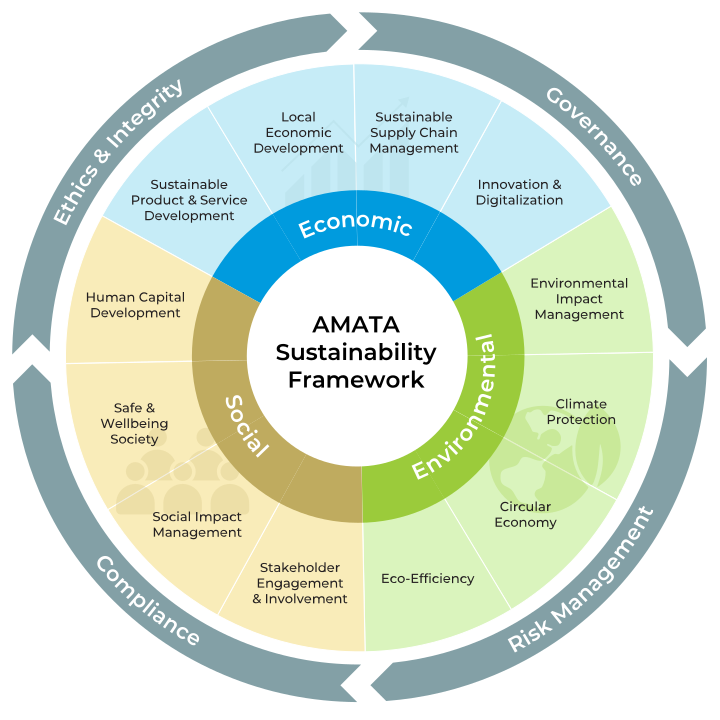
Key Strategies for AMATA Sustainability
By integrating sustainable development principles into its business strategy, the Company has restructured its business plans and is advancing towards becoming a leading smart city developer in the Eastern Economic Corridor. This approach ensures responsiveness to stakeholder needs and enhances adaptability to global shifts and emerging risks. The Company aims to create a well-balanced city that fosters opportunities and shared benefits for all stakeholders. It is committed to harmonizing business growth with socio-economic progress, ensuring coexistence between industries and surrounding communities while prioritizing natural resource conservation and environmental sustainability.
To achieve these objectives, the Company has established the following core sustainability strategies:
1st Strategy: Creating smart cities that foster economic development while protecting society and the environment
Transitioning from its traditional role as an industrial estate developer, which served as a manufacturing base for global industries, to a leading smart city developer in Thailand’s Eastern Region. This transformation aims to better meet the needs of 12 targeted industries in the Eastern Economic Corridor (EEC) and preparing for the new industry. Through this shift, the Company seeks to create value for stakeholders, society, and the environment while strengthening its unique positioning and competitive advantage.
| Corporate Goals | Strategic Directions |
|---|---|
|
|
2nd Strategy: Growing through strategic business partnerships
Developing new smart city-related businesses to rapidly address customer needs and expectations while ensuring sustainable and high-quality growth. This will be achieved through strategic investments with leading and reputable business partners who bring expertise across various industries. These collaborations will drive innovation, delivering high-value products and services that effectively meet customer demands, generate additional revenue streams, and mitigate risks associated with the core business.
| Corporate Goals | Strategic Directions |
|---|---|
|
|
3rd Strategy: Building a safe and environmentally responsible society
Prioritizing stakeholder safety and taking responsibility for any negative impact on the environment by encouraging efficient resource and waste management among members of the industrial estates and surrounding communities. Developing innovative processes to minimize negative social and environmental impacts and aim to develop new businesses that use natural resources and energy more efficiently.
| Corporate Goals | Strategic Directions |
|---|---|
|
|
4th Strategy: Creating opportunities for stakeholders
Developing businesses in the present and future that can benefit and create opportunities for various stakeholders both within and outside the organization. This includes providing opportunities for employees to develop their skills and advance in their careers, as well as ensuring that people within and outside the industrial estate have access to high-quality products and services to improve their quality of life and opportunities for growing local economy.
| Corporate Goals | Strategic Directions |
|---|---|
|
|
5th Strategy: Creating a decent civil society for the benefit of society as a whole
Fostering a supportive and harmonious society is an essential part of driving sustainable business for the Company. This involves creating a positive community within the Company, including employees who are the main resource for leading organizational success, as well as building external communities such as customer groups in industrial estates, surrounding communities, and local governments. This aims to promote cooperation among them in various activities to achieve collective impact that benefits society as a whole.
| Corporate Goals | Strategic Directions |
|---|---|
|
|

Start
Building the Future
with AMATA
Contact us for more details.
(+66) 38 939 007
(+84) 251 3991 007 (South)
(+84) 203 3567 007 (North)
(+95) 1 230 5627
(+856) 21 810007
(+856) 20 5710007 (Chinese)
(+856) 20 57550007 (English)
© AMATA CORPORATION PCL. All rights reserved.  Web by Toneyes